
Terrace Waterproofing Tips Based on Building Condition
30+ Years Experience | Advanced Waterproofing Technology
Looking for the right waterproofing method for your terrace? Use these terrace waterproofing tips based on cracks, leakage, tile joints, old coating, and slab condition. Choose long-lasting protection with expert guidance.
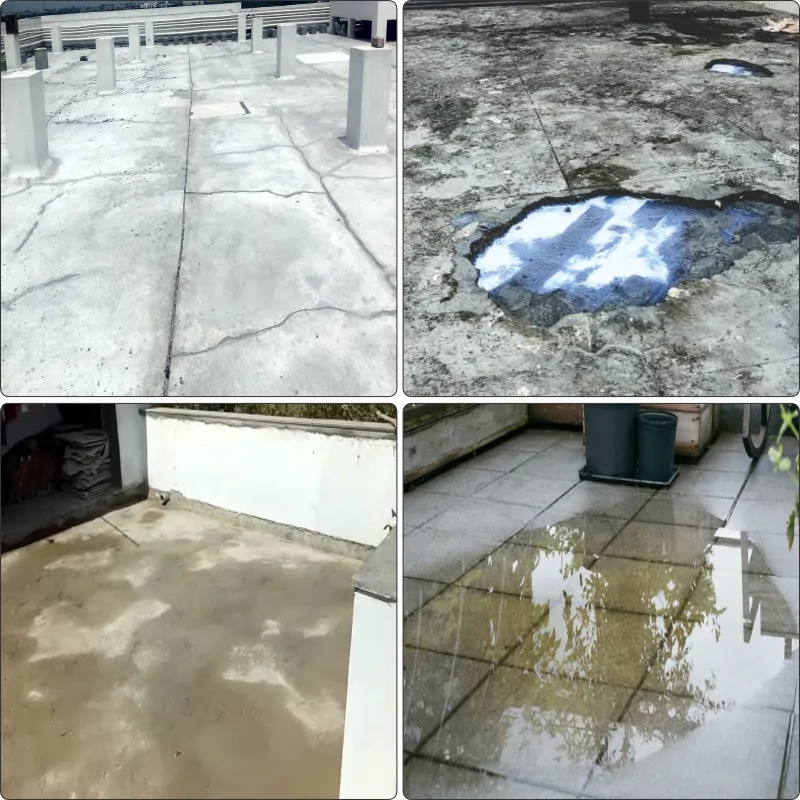
Expert Terrace Waterproofing Tips for Long-Lasting Protection
Choosing the right waterproofing method is important, and these Terrace Waterproofing Tips help you select the best solution for every terrace. old terrace, cracked surface, water ponding area, or damaged tile terrace all need different solutions. Using the right Terrace Waterproofing Tips can help stop leakage, protect the slab, and increase the life of your building. Learn more about our Terrace Waterproofing Services.
Many people apply waterproofing without checking the actual terrace condition. This often leads to repeat leakage, peeling coating, seepage in walls, and wasted money. Proper inspection of cracks, joints, slope, old coating, and surface damage is the first step before starting any waterproofing work. You can also check our Water Leakage Repair Solutions.
These terrace waterproofing tips will help you understand which solution is best for your terrace based on its present condition. Whether your building is old or new, timely waterproofing treatment can reduce repair costs and prevent future water damage. Read our guide on Roof Waterproofing Methods.
With 30+ years of experience, we provide trusted terrace waterproofing solutions for residential, commercial, and industrial buildings. Our expert team checks the terrace carefully and recommends the right waterproofing system for long-lasting protection. Contact Us for Free Terrace Inspection.
8 Common Terrace Problems to Repair Before Waterproofing
Before starting any waterproofing work, it is important to inspect the actual condition of the terrace surface. Many old terraces develop cracks, broken plaster, tile joint gaps, water ponding areas, damaged old coating, and weak concrete surfaces over time. If these problems are ignored, even the best waterproofing treatment may fail early.
Proper surface repair is the first and most important step for long-lasting waterproofing results. Fixing visible damage helps the coating bond better, improves water flow, and prevents future leakage or seepage inside the building.
These terrace waterproofing tips focus on the most common problems seen in old terraces. By identifying and repairing these issues first, you can save money, avoid repeat work, and get stronger protection for your roof slab.
These Terrace Waterproofing Tips explain common terrace problems and the right repair method before waterproofing.
1. Cracked Surface and Loose Plaster on Terrace Slab
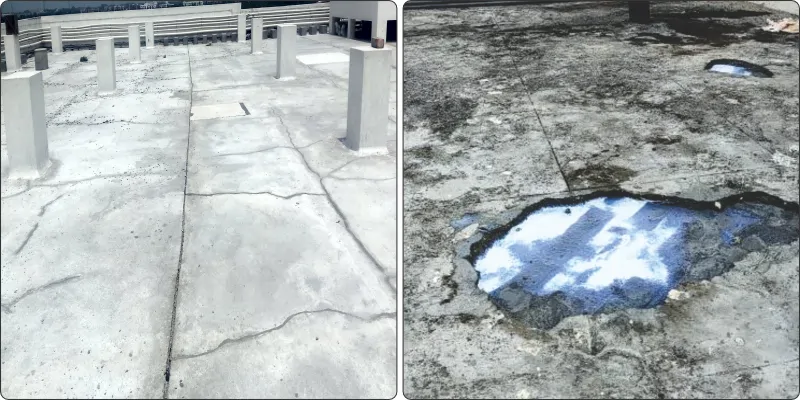
Cracked surface and loose plaster are common problems in old terraces. Cracks allow rainwater to enter the slab and weak plaster weakens the top surface. If ignored, waterproofing materials may not perform properly and leakage can return again.
Before waterproofing, the terrace surface should be checked properly to identify cracks, hollow plaster, and damaged areas.
Recommended Repair Method:
- Clean all visible cracks and loose surface areas
- Remove weak, hollow, or damaged plaster parts
- Fill cracks with suitable crack repair material
- Repair surface with polymer mortar or plaster
- Level the repaired area for smooth finishing
- Allow repaired surface to cure before waterproofing
Proper surface repair helps the waterproofing layer last longer and gives better protection against future water seepage.
2. Water Ponding or Improper Slope
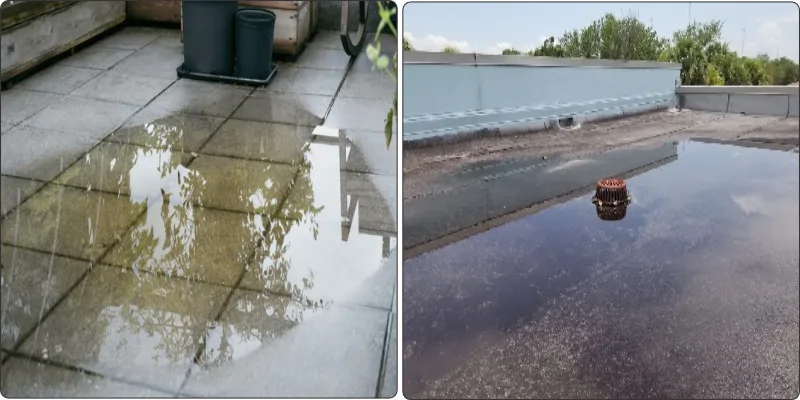
Water ponding and improper slope are common problems in old terraces. When rainwater stays on the surface for many hours, it slowly damages the slab and weakens the waterproofing layer. If ignored, leakage problems can return again.
Before waterproofing, the terrace level should be checked properly to identify low areas where water collects.
Recommended Repair Method:
- Mark all low spots and uneven surface areas
- Remove weak or damaged top surface if required
- Apply polymer mortar or suitable screed material
- Create proper slope toward drain outlets
- Check smooth water flow after levelling work
- Allow repaired surface to cure properly before waterproofing
Proper slope correction helps the waterproofing layer last longer and gives better protection against future water seepage.
3. Open Tile Joints or Broken Terrace Tiles
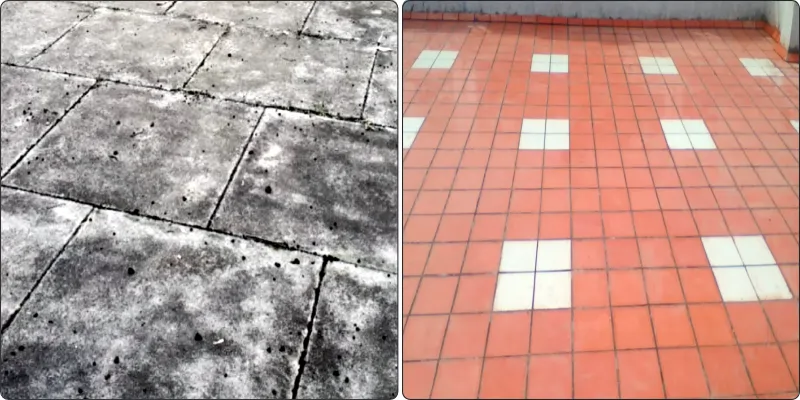
Open tile joints and broken terrace tiles are common problems in old terraces. Water enters through joint gaps and cracked tiles, which slowly damages the slab below. If ignored, waterproofing materials may not perform properly and leakage can return again.
Before waterproofing, the tiled surface should be checked properly to identify open joints, cracked tiles, and loose areas.
Recommended Repair Method:
- Clean all tile joints and damaged surface areas
- Remove broken, loose, or hollow sounding tiles
- Refill open joints with suitable grout material
- Replace damaged tiles where required
- Level the repaired area for smooth finishing
- Allow repaired surface to cure before waterproofing
Proper tile repair helps the waterproofing layer last longer and gives better protection against future water seepage.
4.Terrace Without Coving Joints (Vata)
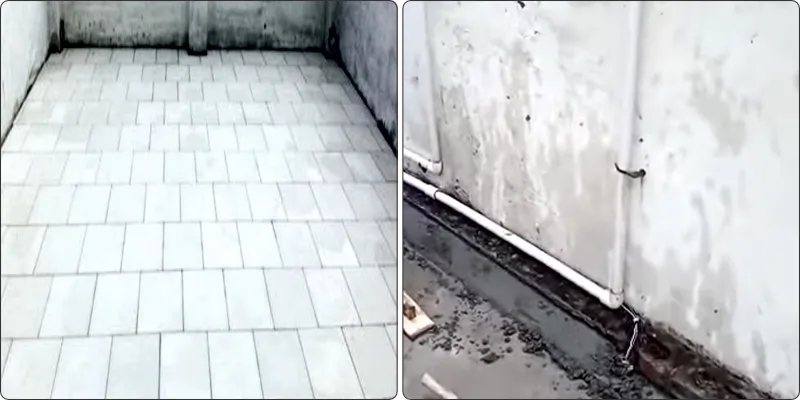
Terrace without coving joints is a common problem in old terraces. Open wall corners and floor joints allow rainwater to enter the slab and side walls. If ignored, waterproofing materials may not perform properly and leakage can return again.
Before waterproofing, all terrace wall corners and joint areas should be checked properly for gaps and weak portions.
Recommended Repair Method:
- Clean all wall corner and joint areas
- Remove loose dust and damaged material
- Make proper coving joints with polymer mortar
- Seal cracks and open gaps carefully
- Finish corners with smooth rounding shape
- Allow repaired joints to cure before waterproofing
Proper coving joint repair helps the waterproofing layer last longer and gives better protection against future water seepage.
5. Leakage Around Pipe Outlets and Drain Points
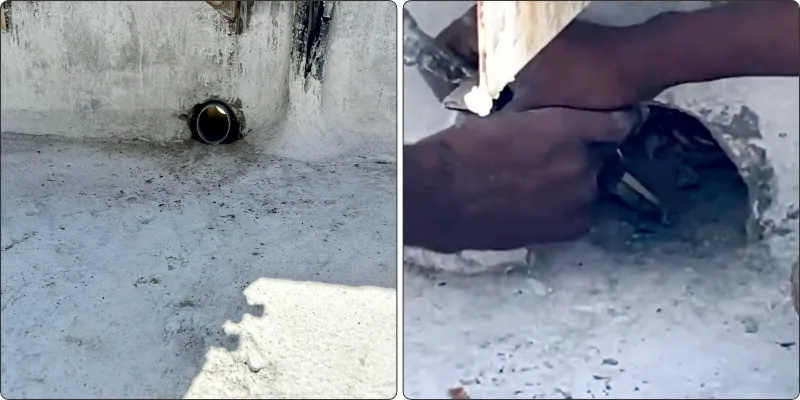
Leakage around pipe outlets and drain points is a common problem in old terraces. Water enters through open gaps and weak joints near outlets, which slowly damages the slab. If ignored, waterproofing materials may not perform properly and leakage can return again.
Before waterproofing, all outlet points and drain areas should be checked properly for cracks, gaps, and damaged portions.
Recommended Repair Method:
- Clean all outlet and drain joint areas
- Remove loose material around pipe points
- Fill open gaps with suitable repair material
- Seal pipe joints and drain corners carefully
- Check smooth water flow toward outlets
- Allow repaired areas to cure before waterproofing
Proper outlet repair helps the waterproofing layer last longer and gives better protection against future water seepage.
6. Damaged Old Waterproofing Layer
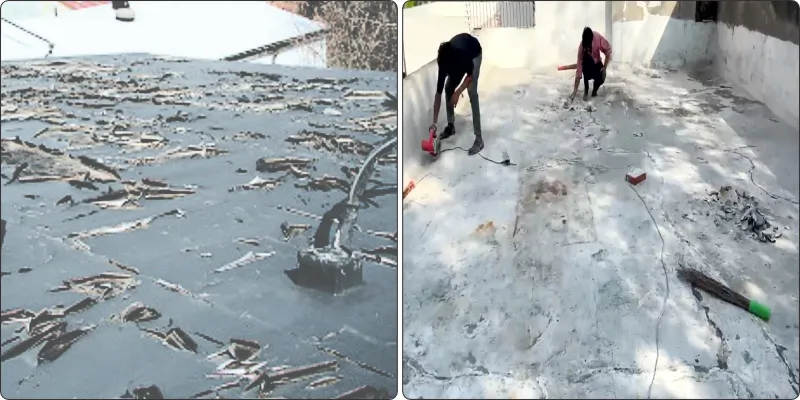
Damaged old waterproofing layer is a common problem in old terraces. Peeling coating, cracked membrane, and weak old layers reduce surface protection over time. If ignored, new waterproofing materials may not perform properly and leakage can return again.
Before waterproofing, the old surface should be checked properly to identify loose coating, broken membrane, and weak portions.
Recommended Repair Method:
- Clean the full terrace surface properly
- Remove loose old coating and damaged layers
- Scrape weak membrane from affected areas
- Repair cracks and uneven surface portions
- Prepare smooth base for new waterproofing
- Allow repaired surface to dry before waterproofing
Proper surface preparation helps the waterproofing layer last longer and gives better protection against future water seepage.
7. Very Old or Long-Neglected Leakage Home
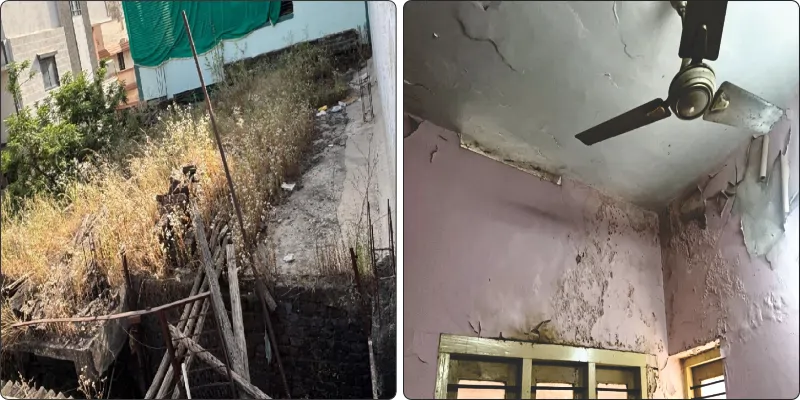
Very old or long-neglected terraces are common problems in aging buildings. Years of leakage, damaged plaster, surface cracks, and weak concrete reduce terrace strength over time. If ignored, waterproofing materials may not perform properly and leakage can return again.
Before waterproofing, the full terrace surface should be checked properly to identify weak areas, cracks, and damaged portions.
Recommended Repair Method:
- Clean the complete terrace surface properly
- Remove loose plaster and damaged portions
- Repair cracks and weak surface areas
- Rebuild low or broken sections if required
- Level the surface for smooth finishing
- Allow repaired surface to cure before waterproofing
Proper terrace repair helps the waterproofing layer last longer and gives better protection against future water seepage.
8. Waterproofing for Beam–Slab Terraces
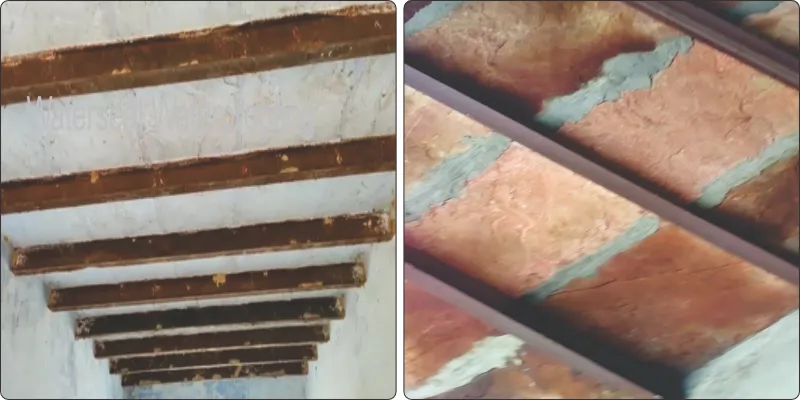
Beam-slab terraces need special treatment because beams and slab joints can develop cracks over time. Water often enters through joint lines and weak surface areas. If ignored, waterproofing materials may not perform properly and leakage can return again.
Before waterproofing, all beam joints, slab lines, and surface cracks should be checked properly for damage.
Recommended Repair Method:
- Clean the full terrace surface properly
- Check beam joints and slab connection lines
- Fill cracks with suitable repair material
- Repair weak joints with polymer mortar
- Level surface for smooth waterproof coating
- Allow repaired surface to cure before waterproofing
Proper beam-slab repair helps the waterproofing layer last longer and gives better protection against future water seepage.
Conclusion
Choosing the right terrace waterproofing method is not only about applying a coating. It is important to first inspect the actual terrace condition and repair surface damage, cracks, joints, slope issues, and weak areas before waterproofing.
By following these terrace waterproofing tips and selecting the correct treatment based on your terrace condition, you can prevent future leakage, increase slab life, and save repair costs.
By following these Terrace Waterproofing Tips, you can reduce repair cost and stop future leakage.
Common questions about Terrace Waterproofing Tips are answered below.
How should I repair damaged or uneven plaster before waterproofing?
Cracked, uneven, or flaking plaster must be patched and leveled before applying any waterproofing layer. Following proper guidance on terrace waterproofing, repairing plaster ensures a smooth and durable surface for effective waterproofing.
What should I do if water ponds or leaks on my terrace?
A terrace with water ponding or leakage requires careful repair before waterproofing. Following proper guidance on terrace waterproofing, you can fill depressions, create the correct slope, and prevent water accumulation, ensuring a long-lasting waterproof terrace.
If you are using Waterseal Psv-Premix Advanced Ready-to-Use Solution for waterproofing, there is no need to create additional slope for small amounts of standing water, as this solution effectively handles minor ponding while providing durable waterproofing.
How can I fix open tile or stone joints on my terrace?
Gaps between tiles or stone joints allow water to seep into the terrace. As part of our guidance on terrace waterproofing, these joints should be properly sealed with cement or an Instant Crack Filler Kit before applying the waterproofing layer. This prevents leaks and ensures a durable, waterproof surface.
For more detailed instructions on filling cracks and joints, you can refer to this guide: How to Fix Cracks
Why is it important to repair the cement joint between the terrace surface and boundary wall?
The boundary wall forms the edge of your terrace, where water naturally accumulates. If the cement joint connecting the terrace surface to the boundary wall is damaged or missing, or if skirting tiles are not installed on tiled terraces, water can seep directly into the walls. Following proper guidance on terrace waterproofing, repairing these joints before applying the waterproofing layer strengthens the system and ensures long-lasting protection against leaks.
How should I handle large cracks and gaps in terrace walls and corners?
Over time, terrace walls and corners can develop large cracks and gaps. For the most effective results, it’s ideal to apply a waterproofing coating to the terrace surface and the adjoining walls. However, if that’s not feasible, you can repair the cracks and gaps first and then apply the waterproofing coating on top. Following proper guidance on terrace waterproofing ensures that the repairs and coating together provide durable and long-lasting protection against leaks.
What should I do if an old waterproofing layer already exists on the terrace?
Before applying a new waterproofing layer, it is essential to thoroughly clean the existing layer using a wire brush or grinder. This ensures that the surface is free from old chemicals or bitumen sheets, as a new waterproofing material will not adhere properly over the previous layer. Following proper guidance on terrace waterproofing helps achieve a uniform, durable, and effective waterproofing finish..
How should I prepare a terrace for waterproofing if grass and plants have grown on it over the years?
Such terraces require thorough cleaning and surface preparation before waterproofing. Remove all biological growth like grass, moss, and plants, as well as any accumulated debris. Repair any damaged portions of the surface and clean the terrace completely to remove dust and dirt. Following proper guidance on terrace waterproofing ensures that the surface is perfectly ready for a durable and effective waterproofing application.
Protect your home or commercial property from terrace leakage, cracks, and water seepage with our waterproofing solutions. → DIY Waterproofing Guide
Signs of a Leaky Home: Does Your House Need Waterproofing?
Best Terrace Waterproofing Chemicals for Long-Lasting Protection
DIY Terrace Waterproofing: How to Stop Roof Leakage by Yourself
Terrace Outlet Pipe Core Filling with Non-Shrink Grouting Solution
Waterproofing Tips Based on cracks, leakage & slab condition.
Need Expert Assistance?
If you’re unsure about your terrace condition, don’t worry — we can help.
Record a short video of your terrace (and any visible leakage areas) and send it to 9825585997 on WhatsApp.
Our experienced waterproofing experts will review it and provide complete guidance tailored to your building.